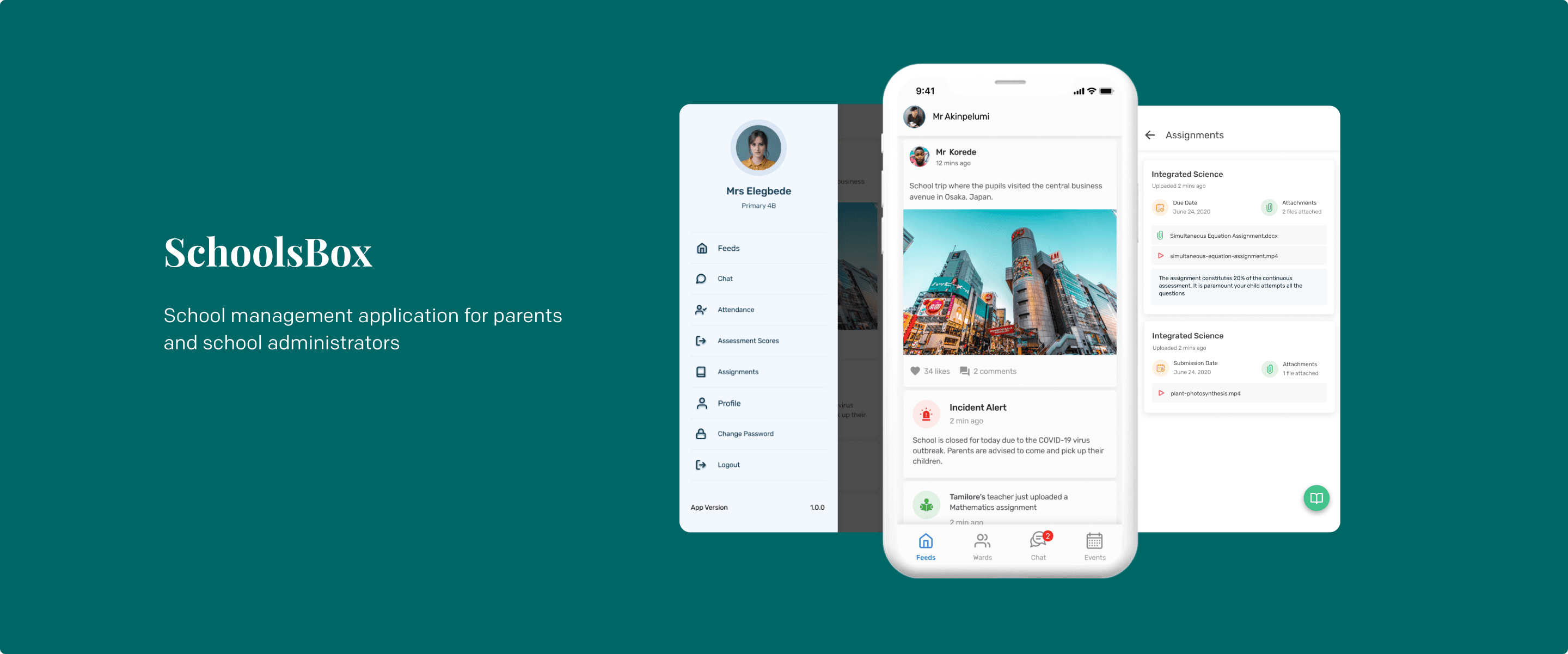
Schoolsbox is an online platform designed to help school administrators manage students and staff while enabling parents to stay connected to their child’s academic progress. Initially launched in 2015 as a web-based platform, Schoolsbox quickly gained traction but faced a critical challenge: bridging the communication gap between administrators, teachers, and parents. By 2018, it became clear that a mobile-first solution was needed to make the experience more seamless and accessible. That’s when the Schoolsbox mobile app project began.
Research & Discovery
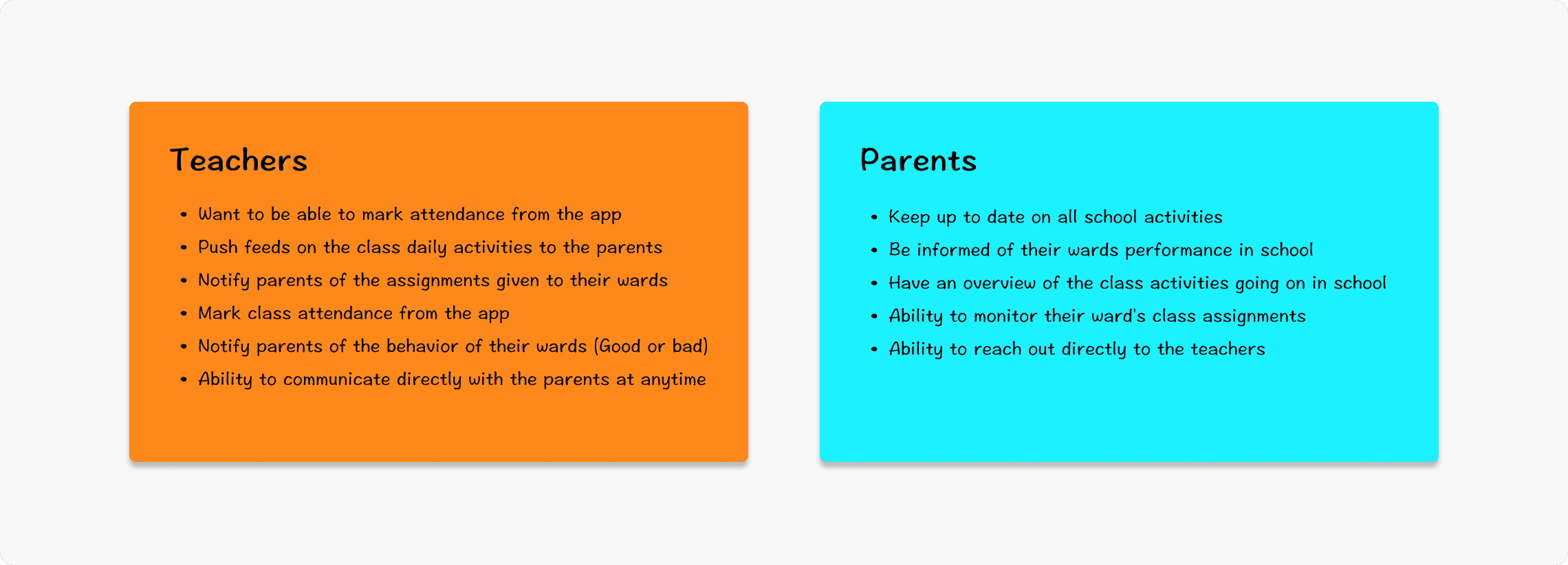
To better understand the needs of different user groups, I conducted qualitative research across the three core stakeholders:
School Administrators – Reviewed their feedback on the existing web platform, identifying gaps in efficiency and reporting.
Parents – Held conversations to uncover the frustrations of staying updated with their children’s academic performance and behavior.
Teachers – Interviewed teachers whose schools already used Schoolsbox, learning about their workflow bottlenecks and communication challenges.
This helped me clearly define the problem spaces and frame the opportunities the app should address.
Design Approach
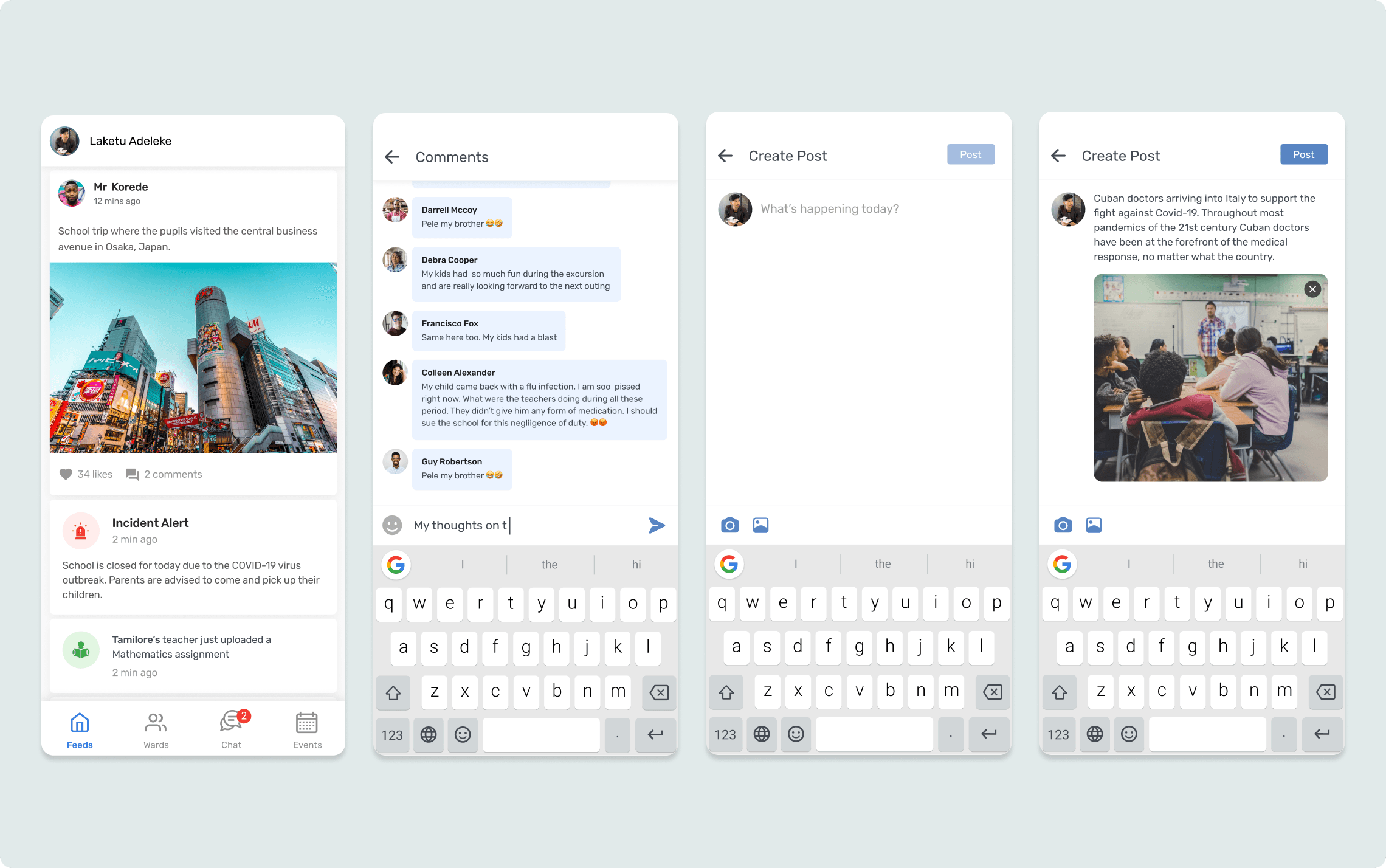
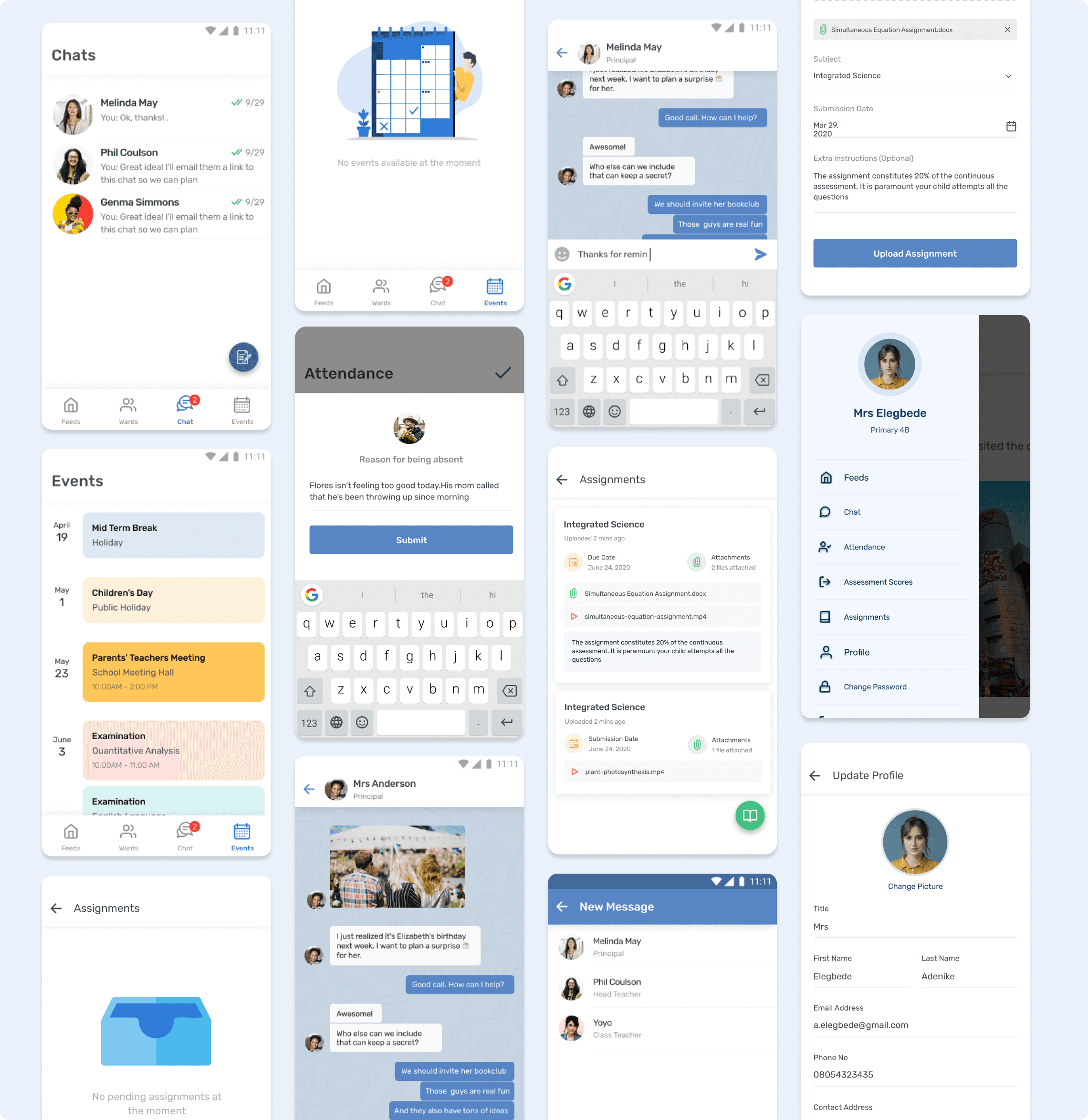
With insights in hand, I structured the app’s information architecture to serve two primary user types, teachers and parents. To keep the experience tailored, users would be redirected to the appropriate section of the app based on their profile.
I worked through the design process systematically:
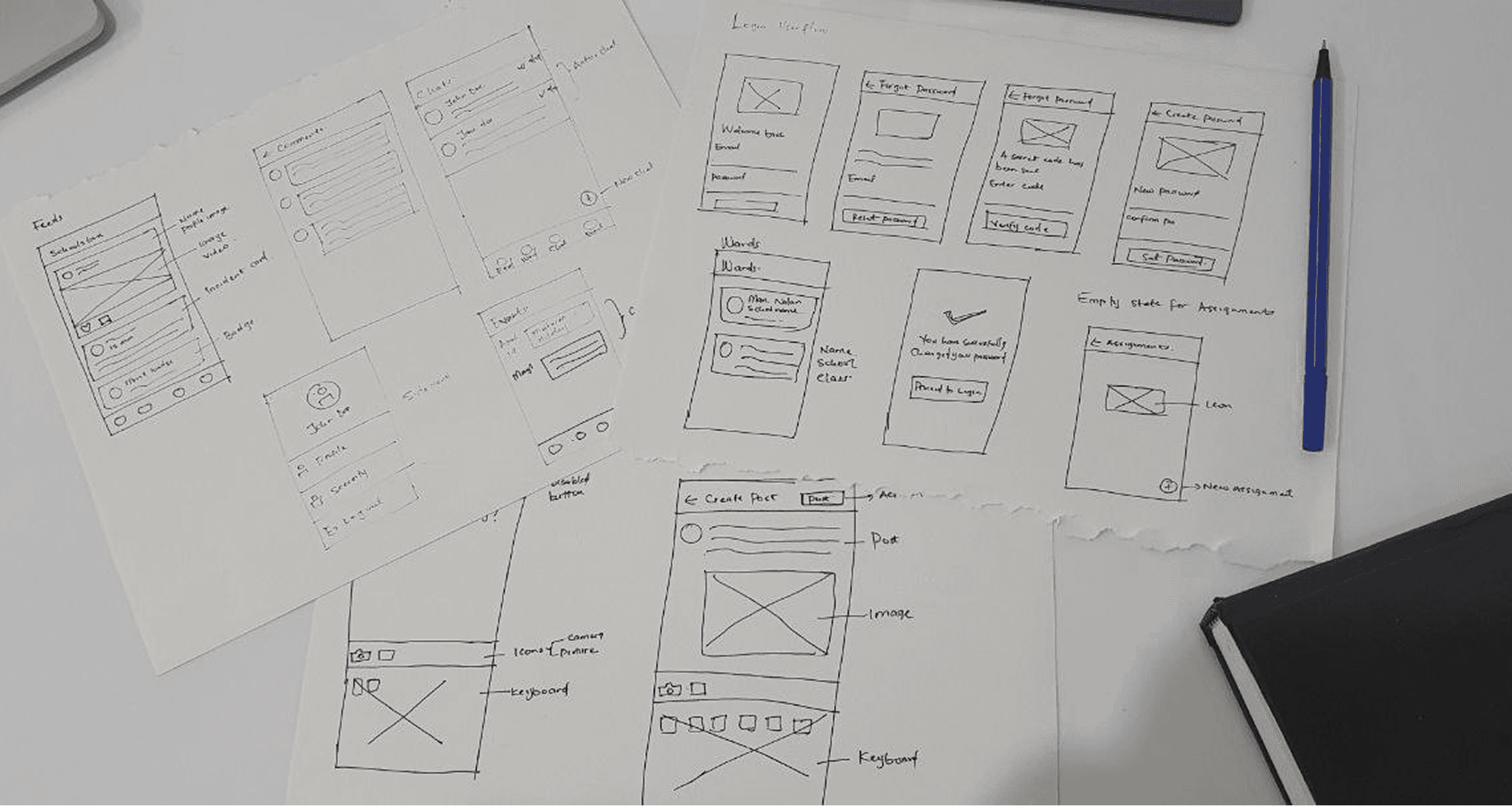
Sketches & Wireframes – Explored layouts and flows for both parent and teacher journeys.
High-Fidelity Designs – Created polished, user-friendly screens focused on clarity and ease of navigation.
Reusable UI Components – Built a scalable design system to ensure consistency and accelerate future feature development.
Prototyping – Produced interactive prototypes for validation and stakeholder feedback.
Impact
The Schoolsbox app was designed to transform the way schools, parents, and teachers interact:
For parents: A centralized hub to track their child’s academic progress, assignments, and behavior, improving transparency and involvement.
For teachers: Streamlined communication with parents, reducing time spent on repetitive updates and increasing focus on teaching.
For administrators: Better oversight and reporting tools to manage the ecosystem efficiently.
Ultimately, the app aimed to foster a stronger school-home connection, enhance trust, and improve student outcomes by ensuring parents are consistently engaged in their child’s learning journey.